
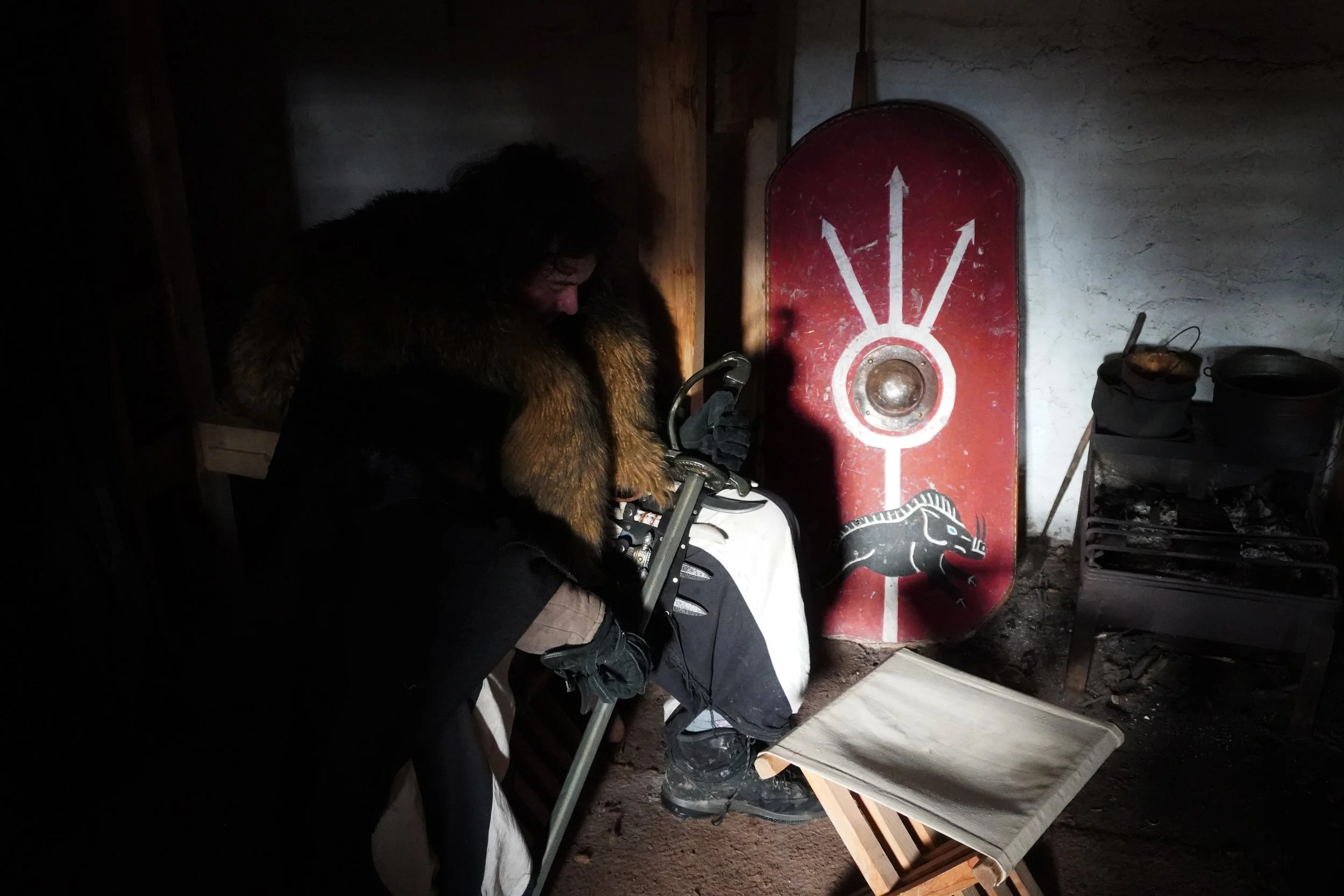
Photography by Max Wilkins
Weapons
Weapons used in Larp need to be safety checked by referees before being used. If a weapon has not been checked or you believe it has become unsafe, please bring it to a referee. It is recommended that larp weapons from experienced craftspeople be used. Regular checks by the owner of the weapon throughout the event, especially before a potential fight, are recommended.
All melee weapons deal a single point of damage when striking a character. For each enemy, a character can take one hit or call per second. A character should aim to land one hit or call a second. Eg. A character who is struck twice within the span of a second by one enemy character, only takes one point of damage. A character who is struck twice within the span of a second by two enemy characters takes two points of damage.
Characters are encouraged to roleplay each swing and hit to the best of their ability. This is to create more deliberate, heroic fights between characters for the enjoyment of everyone.
When swinging larp safe weapons, all blows should be softened to land without force. Enough for the target to notice, but not enough to harm.
Avoid hitting the groin, neck and head.
Only strike another character using the part of the weapon designed to be struck safely. Eg. Do not strike with the pommel of a sword.
Do not thrust or stab with any weapon, unless it has been designed to safely do so.
Great weapons, Polearms and Pike weapons cannot be used to strike or parry while held in one hand. If such a weapon is held in one hand by a character and is struck by an enemies weapon, the character takes a point of damage.
Hits against the claws of a Monstrous character does not count for damage.
Do not attempt to parry arrows or bolts using a weapon.
Should a weapon hook against something worn or wielded by another person, both people should pause, allow it to be safely unhooked, and then resume when both are ready. Weapon hooking should not be done intentionally.
Weapon Specifications
Daggers: Between 8’ and 24’ inches long.
One Handed Weapons: Between 24’ and 42’ inches long.
Great Weapons: Between 43’ and 60’ inches long. Must be held in two hands to strike and parry.
Polearms: Between 61’ and 84’ inches long. May have a stab safe tip. Must hold the weapon with both hands at least 18’ apart to strike and parry.
One Handed Spears: Must be between 60” and 84” long, You must hold the weapon within 6" of the centre of the shaft, Must have a thrust-safe tip and only be used for thrusting
Pikes: Between 84’ and 108’ inches long. Must have a stab safe tip. Must hold the weapon with both hands at least 18’ apart to stab and parry. Must only be used for stabbing attacks using the stab safe tip.
Throwing Weapons: Must be 8’ or longer. Must be safed by a referee.
Shields
Any character can use a shield up to 40” (1m) in height and upto 24'“ (60cm) in width, or upto 40” (1m) in diameter for a round shield.
A shield must be held by a handle or strap in the hand.
A shield is ineffective if just strapped to an arm or to a back. If struck like this, the strike is not negated.
You cannot use a shield as a weapon and you cannot use a shield to barge into someone.
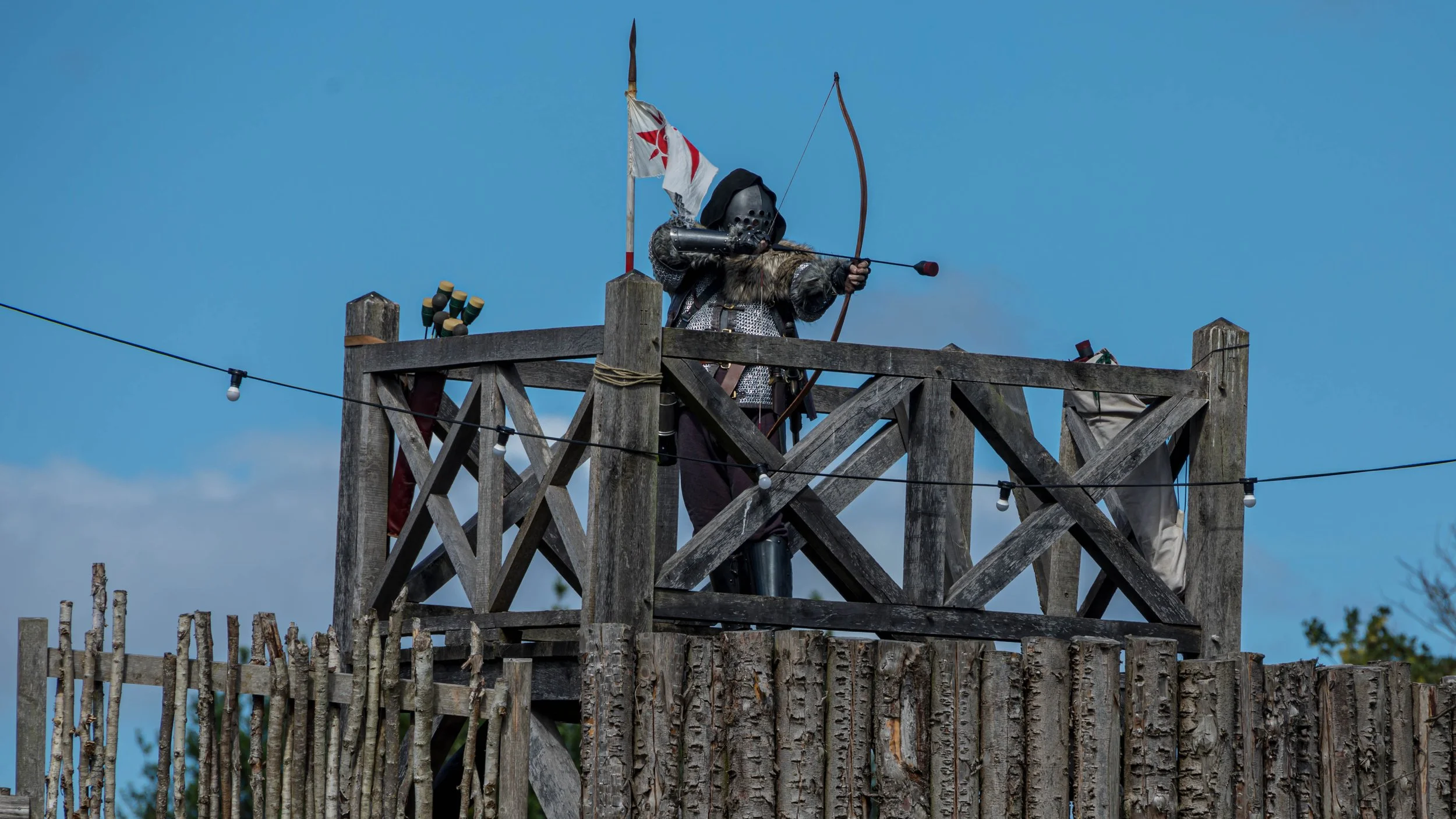
Bows and Crossbows:
Bows and crossbows firing larp safe arrows or bolts are much more powerful than melee weapons. A character struck in the torso by an arrow will immediately enter their bleed count. A character struck in one of their legs may not move from that spot until they are healed or picked up. A character struck in the arm, cannot fight with, defend themselves, pick up another character or staunch the bleeding with that arm. A character struck in the armour while wearing heavy or superheavy armour instead takes two damage.
This should also be roleplayed to the best of a character's ability. You have just been shot by an arrow after all…
Bows and crossbows must use larp safe arrows and bolts.
Bows and crossbows must be held in both hands to be shot.
Only one arrow or bolt may be fired at a time.
Bows and crossbows are limited to a maximum of 30lbs draw weight.
Arrows and bolts cannot be fired after dark, in heavy wind or heavy rain, at referee discretion.
Bows and crossbows should not be fired at point blank range, which is three metres or less. Within ten metres, bows should not be fired at full draw.
Bows and crossbows should not be aimed at the head or groin.
Bows and crossbows should not be used to strike or parry. In close combat they should be safely held behind you.
Every arrow and crossbow bolt should be safety checked for damage before firing, especially if they have already been fired recently.
Photography by Ben Smith